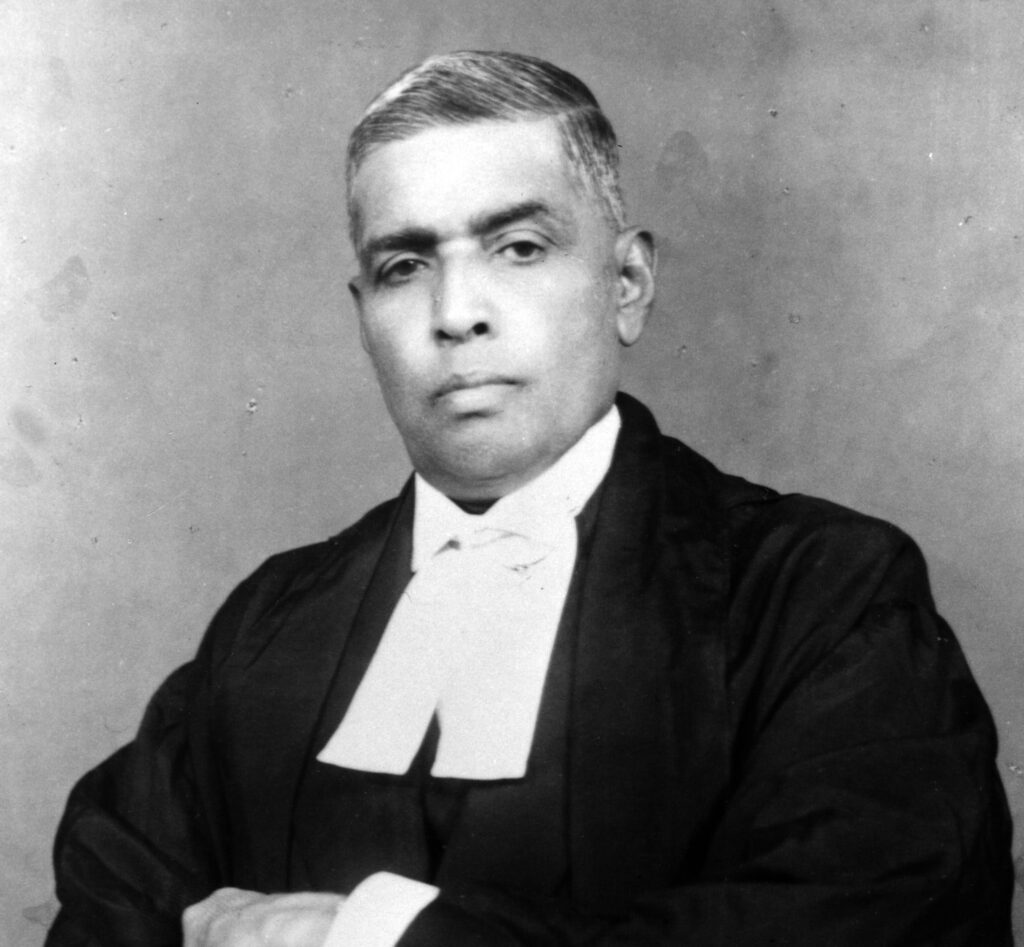
Radha Binod Pal is still the most respected person in Japan. He was born into a poor family on January 27, 1886, in the village of Salimpur in the Kushtia district, now in Bangladesh. He passed the entrance examination in 1903 and the F.A. examination in 1905 from Rajshahi College with distinctions. He graduated with honors in mathematics from Presidency College in 1907 and an MA (1908) in mathematics. Radha Binod worked as a clerk at the Allahabad Accountant General’s Office before obtaining his BL degree in 1911. He later served as a lecturer in mathematics at Ananda Mohan College, Mymensingh (now in Bangladesh). Alongside his teaching, he practiced law at the Mymensingh Bar. In Mymensingh, he further stretched his legal qualifications by obtaining the LLM degree (1920) from Calcutta University. He stood first in the university’s class. Pal then moved to Calcutta to build a legal career in the High Court.
Dr. Radhabinod Pal earned a PhD in law.
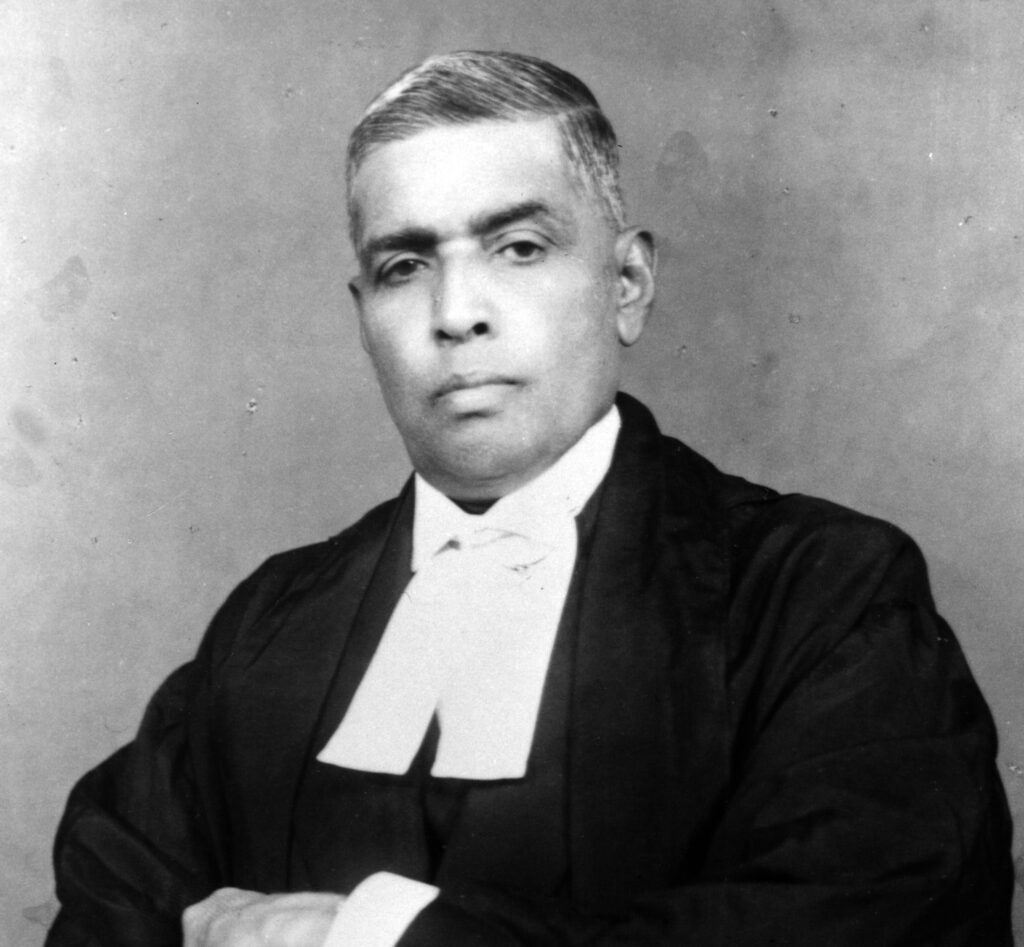
In 1924, Radhabinod Pal was awarded the Doctor of Laws (LL.D.) degree by the University of Calcutta. His LL.D. dissertation dealt with Hindu philosophy of law… The subject of his PhD thesis was the Hindu philosophy of law in Vedic and post-Vedic times before the Institutes of Manu. Dr. Pal taught law at the University Law College between 1923 and 1936. He earned respect as a legal authority that reached far and wide. He delivered the most prestigious Tagore Law Lecture three times, the first in 1925, the second in 1930, and the third in 1938. He lectured on the Law of Primogeniture with Special Reference to India, Ancient and Modern; the History of Hindu Law in the Vedic and Post-Vedic Times Down to the Institutes of Manu; and Crimes in International Relations.
Radha Binod Pal becomes president of the International Academy of Comparative Law
Radha Binod Pal became joint president of the International Academy of Comparative Law and a member of the International Law Association in 1937. His high-profile image as a legal scholar earned him the prestigious position of legal advisor to the government of India (1941). Soon after, he was appointed a judge of the Calcutta High Court in 1944. In March 1944, Pal was appointed Vice Chancellor of the University of Calcutta. He retired from active life in 1946 and returned to his home village of Salimpur, where he lived for the rest of his life.
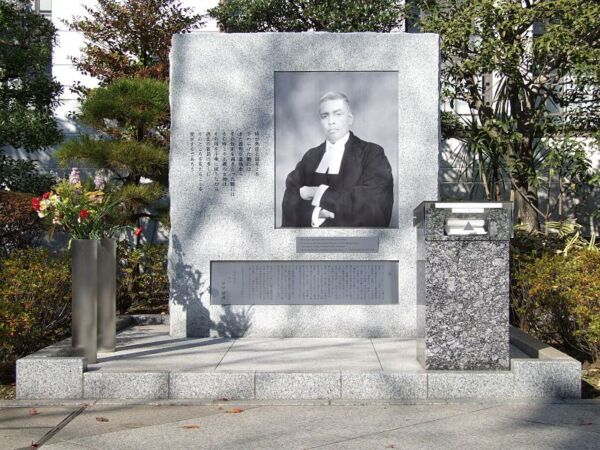
Justice Pal becomes internationally famous
As the Second World War ended and Japan surrendered, the Allied Powers decided that a few Japanese leaders and generals who, according to them, were supposed to be responsible for Japan’s involvement in the Pacific War as well as for building militarist Japan in the 1930s and early 1940s would be put on trial. General Douglas MacArthur, the Supreme Commander of the Allied Powers, established the International Military Tribunal for the Far East by the authority invested in him by the Potsdam Declaration. The Allies held a trial (1946-1948) of all the major Japanese war ‘criminals,’ in which eight of Japan’s top-ranking leaders got death sentences, while 17 others were imprisoned.
In all, eleven judges were appointed to constitute the tribunal. The majority of the tribunal’s members found the Japanese leaders guilty of the charges of war crimes and sentenced them under international law. But Dr. Radhabinod Pal, the lone judge from India, disagreed with the majority judgments. He delivered a dissenting judgment and refused to agree with the majority. In his long four-hundred-page judgment, Pal showed that the charges brought against the defendants by the prosecution were not legally tenable. He further remarked that the evidence was all tenuous and reflected the attitudes and whims of the victors.
Judge Pal’s dissenting judgment made him the most respected person among the Japanese. Soon, he became a favourite among many for the bold stand he took.
Justice Radha Binod Pal is elected as a member of the United Nations International Law Commission.
In 1952, Radha Binod Pal was elected a member of the United Nations International Law Commission. He was elected second vice chairman in 1954 and chairman of the commission in 1958 and in 1962. Justice Pal was nominated for international judicial positions and served prominently on the UN International Law Commission. In 1959, the government of India honored him by awarding him the Padma Vibhushan and appointing him National Professor of Jurisprudence. In the same year, he was elected a member of the American Society of International Law.
Justice Pal is the most respected person for his iconic dissent.
Judge Pal led a rich life in international law following his iconic dissent. From 1952 until 1966, he was a member of the UN International Law Commission (ILC).
Justice Pal visited Japan many times.
Justice Radha Binod Pal visited Japan several times after the Tokyo War Crimes Trial. In October 1952, at the invitation of Yasaburo Shimonaka, the great humanist of Japan, Judge Pal visited Japan and delivered lectures on peace at various gatherings across the country. In November 1952, at the Asia Conference on World Federation, Justice Pal was elected president of the conference. At the end of the conference, the Hiroshima Declaration (of peace) was adopted. The Nihon University of Japan honored him with the title of LLD (honoris causa).
The Emperor of Japan conferred upon him the First Order of the Sacred Treasure. The metropolitan governors of the two cities granted him the freedom of the cities of Tokyo and Kyoto. During this period (1952-1966), Judge Pal lectured at the Japanese Diet and at Tokyo and Waseda Universities.
Prime Minister Abe meets Justice Pal’s son in 2007.
The Japanese have such profound respect for Judge Pal that, even after his death, when Japanese Prime Minister Shinzo Abe visited India in 2007, he met Radha Binod Pal’s son in Kolkata and exchanged photographs. In fact, among the war criminals of that time was Shinzo Abe’s maternal grandfather, Nobusuke Kishi, who later became the prime minister.
The most respected person in Japan – Justice Pal, passed away on 10 January 1967 at his residence in Calcutta.
In this article, an attempt is made to study the life of Justice Radha Binod Pal. Justice Radha Binod Pal, an Indian judge of international standard who brought laurels to India by his jurisprudence, was born into a low-income family on 27 January 1886 in the village of Salimpur in Kushtia district, now in Bangladesh. He passed the entrance examination in 1903 and the F.A. examination in 1905 from Rajshahi College with distinctions. Graduated with honors (1907) and an MA (1908) in mathematics from the Presidency College, Calcutta, Radha Binod worked as a clerk at the Allahabad Accountant General’s Office before he took his BL degree in 1911. He later served as a lecturer in mathematics at Ananda Mohan College, Mymensingh (now in Bangladesh). Alongside his teaching, he practiced law at the Mymensingh Bar. In Mymensingh, he further stretched his legal qualifications by obtaining the LLM degree (1920) from Calcutta University. He stood first in the university’s class. Pal then moved to Calcutta to build a legal career in the High Court.
Dr. Radhabinod Pal earned a PhD in law.
In 1924, Radhabinod Pal received a PhD degree in law (LLD) from Calcutta University. The subject of his PhD thesis was the Hindu philosophy of law in Vedic and post-Vedic times before the Institutes of Manu. Dr. Pal taught law at the University Law College between 1923 and 1936. He earned respect as a legal authority that reached far and wide. He delivered the most prestigious Tagore Law Lecture three times, the first in 1925, the second in 1930, and the third in 1938. He lectured on the subjects of the Law of Primogeniture with Special Reference to India, Ancient and Modern; History of Hindu Law in the Vedic and Post-Vedic Times Down to the Institutes of Manu; and Crimes in International Relations.
Radha Binod Pal becomes president of the International Academy of Comparative Law
Radha Binod Pal became joint president of the International Academy of Comparative Law and a member of the International Law Association in 1937. His high-profile image as a legal scholar earned him the prestigious position of legal advisor to the government of India (1941). Soon after, he was appointed a judge of the Calcutta High Court and served there till July 1943. In March 1944, Pal was appointed Vice Chancellor of the University of Calcutta. He retired from active life in 1946 and returned to his home village of Salimpur, where he lived for the rest of his life.
Justice Pal becomes internationally famous
As the Second World War ended and Japan surrendered, the Allied Powers organized a trial of those Japanese leaders and generals who, according to them, were supposed to be responsible for Japan’s involvement in the Pacific War as well as for building militarist Japan in the 1930s and early 1940s. General Douglas MacArthur, the Supreme Commander of the Allied Powers, established the International Military Tribunal for the Far East by the authority invested in him by the Potsdam Declaration. The Allies held a trial (1946-1948) of all the major Japanese war ‘criminals,’ in which eight of Japan’s top-ranking leaders got death sentences, while 17 others were imprisoned.
In all, eleven judges were appointed to constitute the tribunal. The majority of the tribunal’s members found the Japanese leaders guilty of the charges of war crimes and sentenced them under international law. But Dr. Radhabinod Pal, the judge from India, disagreed with the majority judgment. He delivered a dissenting judgment and refused to agree with the majority. In his long four-hundred-page judgment, Pal showed that the charges brought against the defendants by the prosecution were not legally tenable. He further remarked that the evidence was all tenuous and reflected the attitudes and whims of the victors.
Justice Radha Binod Pal is elected as a member of the United Nations International Law Commission.
In 1952, Radha Binod Pal was elected a member of the United Nations International Law Commission. He was elected second vice chairman in 1954 and chairman of the commission in 1958 and in 1962. Justice Pal was nominated for international judicial positions and served prominently on the UN International Law Commission. In 1959, the government of India honored him by awarding him the Padma Vibhushan and appointing him National Professor of Jurisprudence. In the same year, he was elected a member of the American Society of International Law.
Justice Pal becomes famous following his iconic dissent.
Pal led a rich life in international law following his iconic dissent. From 1952 until 1966, he was a member of the UN International Law Commission (ILC).
Justice Pal visited Japan many times.
Justice Radha Binod Pal visited Japan several times after the Tokyo War Crimes Trial. In October 1952, at the invitation of Yasaburo Shimonaka, the great humanist of Japan, Pal visited Japan and delivered lectures on peace at various gatherings across the country. In November 1952, at the Asia Conference on World Federation and Justice, Pal was elected president of the conference. At the end of the conference, the Hiroshima Declaration (of peace) was adopted. The Nihon University of Japan honored him with the title of LLD (honoris causa).
The Emperor of Japan conferred upon him the First Order of the Sacred Treasure. The metropolitan governors of the two cities granted him the freedom of the cities of Tokyo and Kyoto. During this period (1952-1966), Judge Pal lectured at the Japanese Diet and at Tokyo and Waseda Universities.
Prime Minister Abe meets Justice Pal’s son in 2007.
In 2007, when Japanese Prime Minister Shinzo Abe visited India, he met Radha Binod Pal’s son in Kolkata and also exchanged photographs. In fact, among the war criminals of that time was Shinzo Abe’s maternal grandfather, Nobusuke Kishi, who later became prime minister.
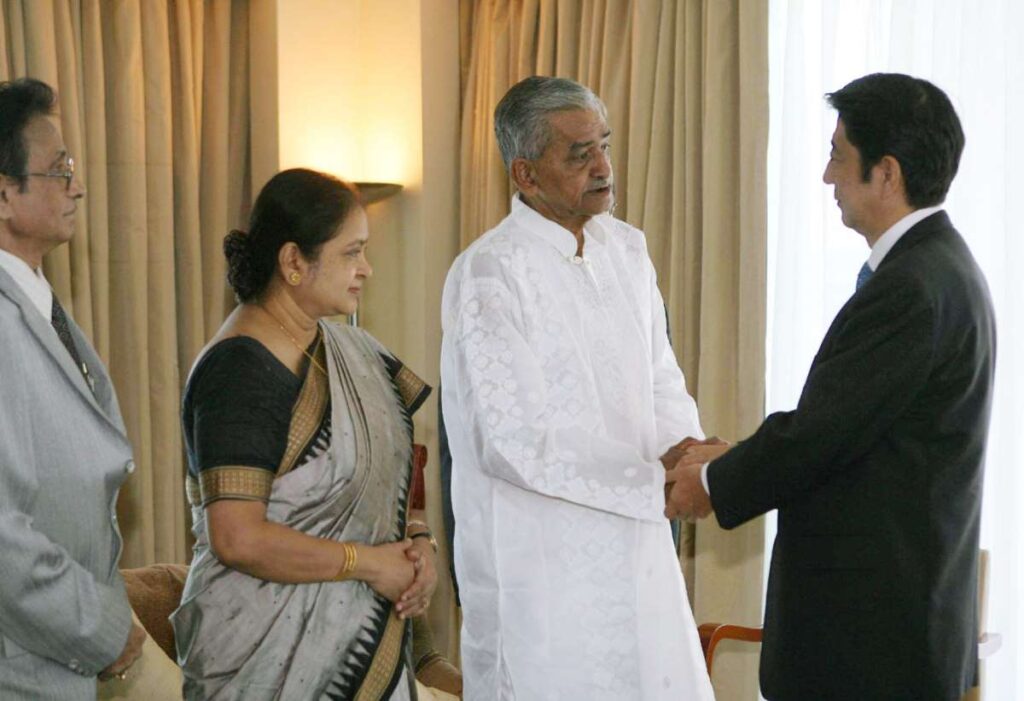
Abe travelled to India’s eastern city, Kolkata, to meet Pal’s octogenarian son, Prasanta Pal. It was a meeting to pay tribute to the latter’s father, whom Japan continues to remember and honor.
At the meeting, Pal showed Abe a picture of his father with Abe’s grandfather, former Prime Minister Nobusuke Kishi, during a 1966 visit to Japan. Kishi was said to have admired Justice Pal immensely. In response, Abe acknowledged, “Your father is still respected by many in Japan.”
‘
Justice Pal passed away on 10 January 1967 at his residence in Calcutta.
REFERENCES:
Monument to Dr. Pal | Guide to Inner Garden | Yasukuni Jinja Precinct Guide