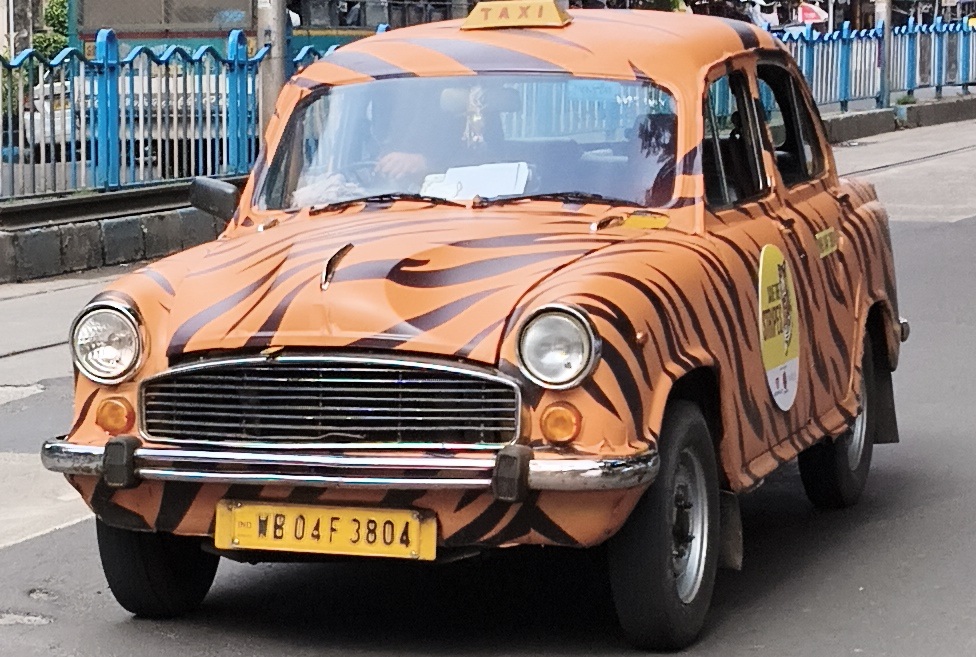
The Ambassador car is now legendary!
Once the undisputed King of Roads, a prized possession for those who had it, a common sight on Indian roads and in every household, the Ambassador car is now a legend. The car is dead! A common sight on the road has been silenced, and its legacy is parked. For decades, the Birla Group’s Hindustan Motors built Ambassador cars at Hindmotor, a town near Kolkata, and they were omnipresent in India’s cultural and rural life.
The Ambassador car: Rise of India’s King on the Road
The Ambassador car was introduced in 1958, following the British-made Morris Oxford Series III, and it was an instant smash hit. Its spacious interiors, robust build, and commanding presence made it a favourite with everyone. Government officials, business executives, and simple families started owning at least one of these cars. It was also well suited to Indian road conditions.
For almost three decades, the Ambassador car ruled Indian roads. At that time, it had no competitors.
It ruled the market for decades, largely because it was larger and more rugged than competitors like the Premier Padmini and the Standard Herald 10.
Rise of Ambassador cars in India’s culture
Owning an Ambassador car added prestige. It was everywhere, from political rallies at election time to weddings to family vacations.
Why the Ambassador car fell abysmally low:
The Arrival of Maruti—A Market Revolution
Affordable, Sleek, Modern, and Fuel-Efficient
The turning point came in 1983 with the entry of the Maruti 800, a small car from Maruti Udyog Limited. The Maruti 800 was small, compact, attractive, and more fuel-efficient compared to the huge Ambassador. It cost less than an Ambassador car and became a boon for many middle-class families. A Maruti could easily pass through Indian alleys and by-lanes.
The Ambassador car suddenly looked old-fashioned; people found an alternative in the Maruti. Besides, Maruti provided the following:
* Better mileage
* Lower maintenance costs
* Modern styling
* Small compact size for city driving
* Changing Consumer Preferences
Indian consumers found that Maruti gave the new generation the cars they wanted. Unlike the Ambassador cars, Maruti also began updating and designing new cars. Indians longed for this change, which drove the transition from the old Ambassador to the new, sleek, modern Maruti.
Moreover, the Japanese marketing strategy focused on affordability and innovation; Hindustan Motors struggled to update the Ambassador’s design. It did change the design, but that too flopped. People did not like the redesigned Ambassador cars. The Japanese company understood the Indian mindset and strategised accordingly. It is sad to narrate that our own Birla Group went clueless.
The Ambassador car lost its place very badly. Management failed to restore its position and seemed lost, even though it tried to revive it by introducing new models. People could not appreciate the changes.
Decline in sales of Ambassador Cars
Government Shift and Market Liberalization
The Ambassador car survived on government patronage. It continued to serve as the official car for ministers and babus (government officials). When India liberalised its economy in the 1990s, global carmakers entered the market. Toyota, Hyundai, Ford, and Honda showcased sleek, tech-savvy cars.
The Ambassador, with no innovation to offer, could not compete. Ambassador car sales dropped sharply, and by the 2000s, it had lost its monopoly.
The Close of an Era:
Hindustan Motors stopped producing the Ambassador cars in 2014. The cars that once roared became a memory then.
But it didn’t die only because of competition. It died because it failed to understand consumers’ demand.
Maruti kept innovating and developing, while Hindustan Motors was content to rest on its past achievements. It failed to move with the times.
The Ambassador Car of India‘s Legacy
Even in decline, the Ambassador car has kept an indelible place in Indian vehicle history.
It says the following:
- Post-independence pride—India’s first truly mass-built automobile.
- Cultural symbolism is found in movies, literature, and political iconography.
- Cultural Icons Must Evolve: Even beloved symbols must adapt to survive. The Ambassador car failed to reinvent itself.
- Nostalgia—Many recall family trips in its spacious cabin.
Today, vintage automobile lovers and collectors still see the Ambassador car as a classic car that once ruled the road.
Ambassador vs. Maruti—Lessons for the Car Industry
The Ambassador car and Maruti car have crucial lessons for us:
- Innovation is survival—Maruti prospered by continually updating its models. The company offered users all the latest features.
- Consumer focus matters: The Ambassador car leveraged its status by supplying government departments, while Maruti focused on price and practicality.
The Ambassador car accepted the inevitability.
Conclusion—A Sign of Change
The Ambassador car’s demise, following the introduction of the Maruti car, reflects management’s inability to understand the changing winds. India’s shift from a closed economy to a competitive, consumer-driven market.
Rising fuel costs made the Ambassador untenable compared with the influx of sleek Japanese vehicles. Spare parts also became scarce.
The Ambassador’s place in history
The Ambassador will always be recognized as the “King of the Road”; nevertheless, Maruti’s victory opened a new chapter in India’s automotive history.
The Ambassador car may no longer rule the streets, but it still rules the hearts of those who grew up with its distinct appeal.
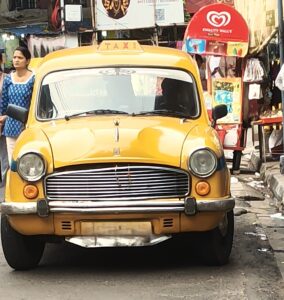
Indians now miss the iconic yellow Ambassador taxis on Kolkata (Calcutta) roads and elsewhere. White taxis have replaced them.
Also, the usual sight of red lights on Babu’s white Ambassador cars is fading!. The cars they travel in are white, with a red bulb glowing, but they are not the usual Ambassador.
The winds of change have affected the entire generation!
REF: Wikipedia