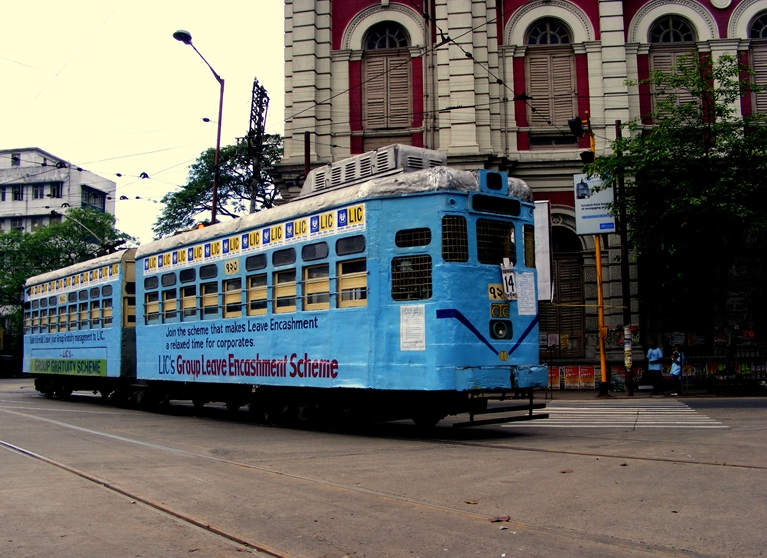
Trams in Kolkata started during the British Raj. The Indian Tramways Act, 1886, established them and regulated the construction, maintenance, and operation of tramways in India. The Act applied to all, whether operated by the government or by private companies
Now trams run only in Kolkata, though much of their operation has shrunk, as they were considered slow and an impediment to the quick movement of other vehicles. Many found trams too slow, so they lost their charm. Trams required regular maintenance, and the cost of running them was increasing annually.
Trams Entry In Kolkata
On 24th February, 1873, Kolkata got its first tram, which was horse-drawn and covered a distance of 2.4 km from Sealdah to Armenian Ghat. A year later, trams started in Mumbai and Chennai. Nashik got its first tram in 1889. Kanpur and Delhi, too, had trams
Initially, trams were horse-drawn; the first tram was introduced in Kolkata in 1873, and in Mumbai and Chennai, trams began operations in 1874, and in Nashik in 1889. Trams were also introduced in Kanpur and Delhi. Chennai introduced electric trams in 1895.
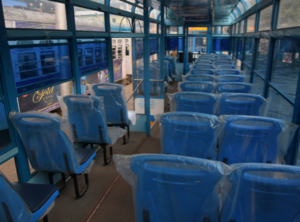
In India, trams now run only in Kolkata. Between 1933 and 1964, this mode of transportation was gradually phased out because its running costs were too high for such slow-moving transportation.
Strike caused disruption of tram services
Tram services have suffered disruption often. Staff strikes usually disrupted the service. In 1921, tram services in Calcutta were suspended for 64 consecutive days because of a strike.
Even after independence, the Calcutta Tramways Company remained under London management, even staying listed on the London Stock Exchange until 1968, according to a BBC report. But the state took day-to-day control a year earlier. The first United Front government took over running the company in 1967, after its British owners stopped paying staff salaries in 1980.
CTC eventually became West Bengal Transport Corporation Limited and has run tram services since 2016.
Trams as a colonial legacy
The tram was a modern convenience, but it was also a visible symbol of the colonial rule that built it. As a result, attacks on trams began as early as the Swadeshi movement of 1905.
Trams were set ablaze when nationalist leaders were arrested during the Civil Disobedience movement and also during the Quit India movement, when overhead wires were cut and tramcars burned. Some local policemen are also believed to have participated in the arson attacks.
Hence, when it came to protesting against oppressive colonial rule, local people did not hesitate to destroy their primary mode of surface transport, which they otherwise used on normal days.
TRAMS FORM CALCUTTA TRAMWAYS COMPANY
Calcutta Tramways Company, better known as CTC, now runs trams in Kolkata. It’s a government undertaking that runs at a loss because few passengers travel on it. Because of the wide earnings–expenditure gap, the Calcutta Tramways Company has been asked to take steps to bridge it. So the company introduced a fleet of buses that ply the roads in Kolkata, where trams once ran.
Economics Of Tram Company
Many studies have been conducted to bridge the earning-expenditure gap, but all good recommendations remained on paper only, and the government implemented a novel way to reduce the losses; for this, the fleet of trams that ply on Kolkata roads has been reduced from 530 in 1980 to 270, and now only 130 trams ply.
To ease travellers’ suffering, air-conditioned coaches have been introduced, but few people travel in them.
Trams’ Contribution To the Environment
A tram is one of the most eco-friendly modes of transportation in the world. Though they are growing in many countries, they have not grown in India since independence. Trams require a dedicated line and a constant electric supply. One of the biggest challenges in India is that its roads are narrow. This causes slow movement, and buses, cars, and trucks share the same road. Sometimes, a fleet of cars stays put in front of trams, disrupting their movement.
Current Status of Trams in Kolkata
Trams are still available in Kolkata as a limited heritage service. But regular commuter services have largely been phased out because of traffic congestion. Trams do not run in most of the regular routes in Kolkata; a special heritage stretch between Maidan and Esplanade remains active for joyrides.
The new state government has said it intends to continue services in Kolkata. It has initiated the necessary work to revive them.
Revival and Surveys: Authorities have announced plans and surveys by consulting firms like RITES to explore modernising or expanding certain heritage and scenic routes.
Officials say the plan is to renovate the existing tracks and preserve the network as heritage infrastructure while also drawing tourists and offering an eco-friendly transport option. New tram carriages, modelled on those running in Australia and parts of Europe, would follow.
Kolkata has stopped most tram services because of traffic congestion on narrow streets, falling passenger numbers, and high maintenance costs.
Kolkata has very little road space (about 6%) compared to other large cities. The number of cars and buses has grown a lot. Trams move slowly and block other vehicles, causing big traffic jams.
Money and Upkeep Issues: The old tracks and cars have suffered from poor maintenance. The state spent its money on building new flyovers, wider roads, and modern transport systems instead of fixing the trams.
Kolkata is the last city in India that still operates its historic tram network.
Trams in Kolkata—A Sentiment
Today, trams ply only in Kolkata, though the company runs at a loss. Perhaps there is no scope for improvement. However, for the people of Kolkata, it is a matter of pride. They want to keep it running, even at a loss, for a short stretch of the road. A sentiment people love to carry and hold on to with pride.