
HOW MUCH BRITISH LOOTED FROM INDIA?
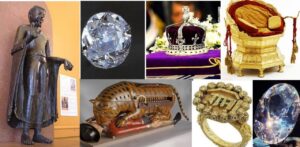
How much did the British loot from India? It’s a question that’s been asked often. Understandably, the British won’t answer it. But the British looting of India has been a subject of deep study ever since an article came out stating that they took away $45 trillion from India during two hundred years of their rule. The topic has appeared in debates and TV talk shows, but no educational institution has undertaken a systematic study; it should be a subject of deep research, and history should spell out the amount looted.
India Gains Independence.
India gained independence from British rule on the 15th of August 1947. It was a peaceful transfer of power for the British. Still, they divided the country into two and displaced the population they ruled, causing untold misery and death—a parallel that has not been found in the annals of history till now. The Indian stalwarts were too kind-hearted, for they allowed them to depart peacefully and didn’t even ask for reparations from the Britishers. Clearly, the loot stayed with the Britishers.
Economists Established the British as Looters
At the turn of the twentieth century, Indian intellectuals like Dadabhai Naoroji were the first to claim that the British looted India. This idea survived in political discourses till 1970, and then it died, though not completely. The narrative the British presented ran counter to their actions in India. It cropped up again in many discourses: “What was the British loot from India? No concrete amount could be ascertained.
Utsa Patnaik says $45 trillion from India
A renowned economist, Utsa Patnaik, says that Britain took nearly $45 trillion from India between 1765 and 1938, which is 17 times Britain’s current GDP. Besides, Indian soldiers fought alongside the British Army in both World Wars. Such was the British loot from India!
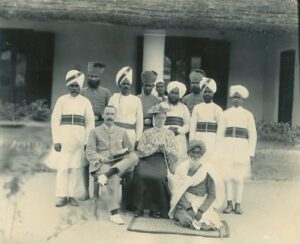
Mr. Shashi Tharoor, MP, says:
In a debate, Shashi Tharoor, the Member of Parliament, declared that India was governed for Britain’s benefit. For 200 years, the British were financed by their depredations of India. In the 18th century, India’s contribution to the world economy was 23%, roughly equal to all of Europe put together, and it fell to 4% after it left the country. Such is the example of their benevolence, which they proudly expostulate. Simply put, India was the Britishers’ cash cow, which means the British looted India.
BENGAL FAMINE
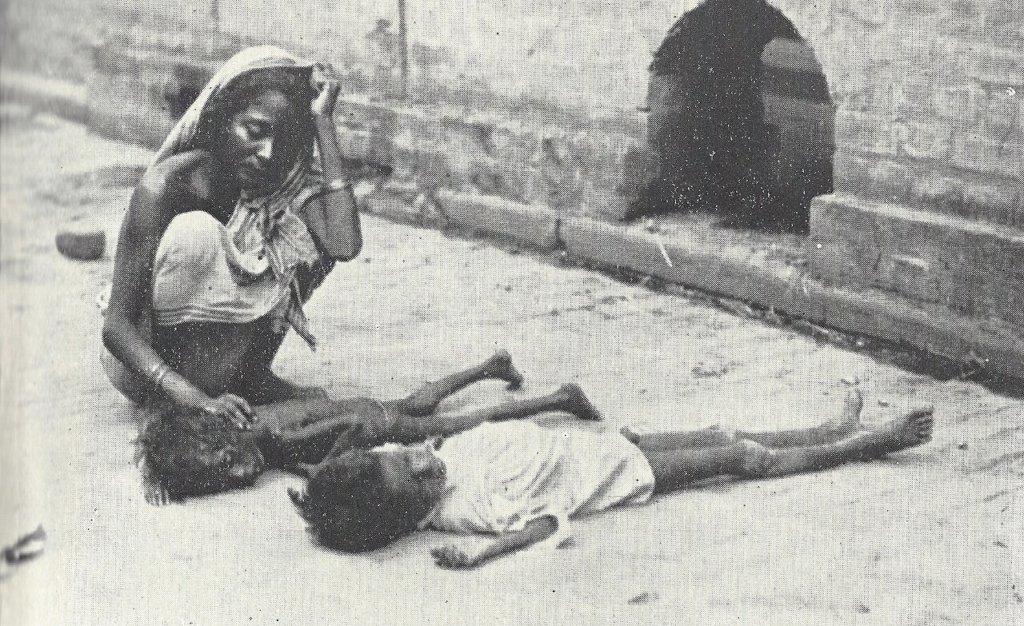
One of the great misdeeds of British rule was the creation of the Bengal famine. The Great Bengal Famine occurred in 1943, in which four million Bengalis died. It was because of the policies of Winston Churchill, for he had ordered the diversion of food from the starving people to the British soldiers. He argued, “The starvation of any underfed Bengalis is less serious than that of sturdy Greeks.” When it was pointed out that the scale of suffering his decision had caused, Mr. Churchill responded by asking, “Why hasn’t Gandhi died yet?”
Famine caused by diverting food from Bengal.
Lord Clive Also Looted From India
The British looting of India can be understood through the actions of Robert Clive, which show that corruption was rampant during British rule. On his first return from India, Robert Clive took home £234,000 in spoils. So enthused was he with India that he could not stay home for a long time and returned to India again in 1765.
Robert Clive Returns To India Again
When Robert Clive returned home two years later, he had a fortune of £400,000. He had a wonderful time in India, for he declared, “An opulent city lay at my mercy; its richest bankers bid against each other for my smiles; I walked through vaults which were thrown open to me alone, piled on either hand with gold and jewels…” The British called him “Clive of India.” Such was the British loot from India!
HEALTH CARE IN SHAMBLES
Life expectancy was approximately 25.4 years around 1800, 27 years at the time of India’s independence, and now more than 71 years.
Because of the loot, India remained impoverished. It would have been a different country if foreign powers had not invaded it.
Reference:
https://www.bbc.com/news/world-asia-india-33618621
‘An Era of Darkness’ by Shashi Tharoor