
Trams in India came during the British Raj. It was established by an ACT called the Indian Tramways Act, 1886, which was enacted to regulate the construction, maintenance, and operation of tramways in India. The Act applied to all, whether operated by the Government or by private companies.
Now trams run only in Kolkata, though much of their operations have shrunk, for they were considered slow and an impediment to the quick movement of other vehicles. Many found trams too slow, so they lost their charm. Trams required regular maintenance, and the cost of running them was increasing annually.
First Tram
On 24 th February, 1873, Kolkata got its first tram, which was horse-drawn and covered a distance of 2.4 Km from Sealdah to Armenian Ghat. A year later, trams started in Mumbai and Chennai. Nashik got its first tram in 1889. Kanpur and Delhi, too, had trams
Initially, trams were horse-drawn, and the first tram was introduced in Kolkata in 1873; in Mumbai and Chennai, trams began operations in 1874; in Nasik in 1889. Trams were also introduced in Kanpur and Delhi. Electric trams were introduced in Chennai in 1895,
In India, trams now run only in Kolkata. Between 1933 and 1964, this mode of transportation was gradually phased out because its running costs were too high for such slow-moving transportation.
Government Takes Over
Calcutta Tramways Company, better known as CTC, now runs trams in Kolkata. It’s a government undertaking company which runs at a loss because there are few passengers travelling in these. Because of the wide earnings–expenditure gap, the Calcutta Tramways Company has been asked to take steps to bridge it. So the company introduced a fleet of buses that ply the roads in Kolkata, where trams once ran.
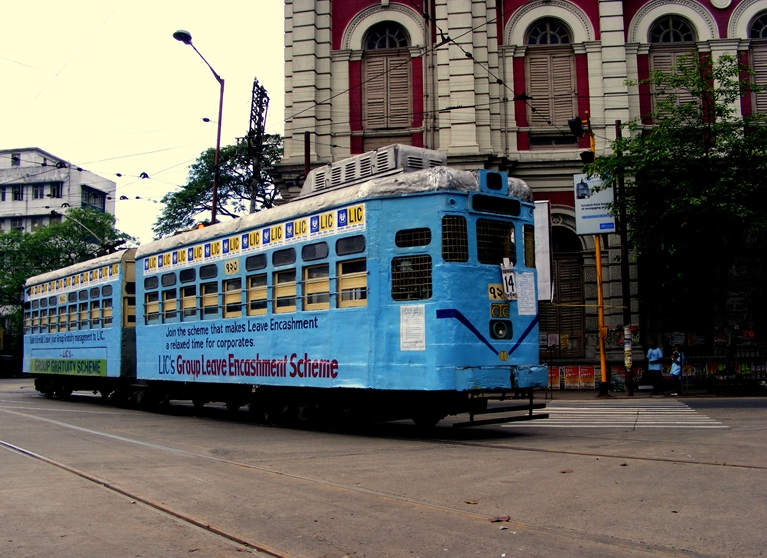
Many studies have been conducted to bridge the earning – expenditure gap, but all good recommendations remained on paper only, and the government implemented a novel way to reduce the losses, and for this, the fleet of trams that ply on Kolkata roads has been reduced from 530 in 1980 to 270, and now only 130 trams ply.
To mitigate the suffering of travellers on trams, air-conditioned coaches have been introduced, but not many travel in them.
A tram is the most eco-friendly mode of transportation in the world. Though it grows in many countries of the world, in India, it has not been able to grow since independence. Trams require a dedicated line along which they run and a constant electric supply. One of the most crucial factors in India is that its roads are not wide. This causes slow movement, and buses, cars, and trucks are running on the same road. Sometimes, a fleet of cars stays put in front of trams, disrupting their movement. Today, trams ply only in Kolkata, though the company runs at a loss. Perhaps there are no scopes for improvement. However, for the people of Kolata, it is a matter of pride. They want to keep it even, at a loss, for a short stretch of the road. A sentiment that people love to carry and want to hold on to with pride.